You are leaving a coffee shop in Chicago when you realize the payment you just made should not reveal your entire financial history. A wallet app can make that transaction convenient, but convenience is not the same as privacy. The important question is not simply whether a wallet is called “private.” It is which information is hidden, from whom, and at what layer of the system.
That distinction matters when comparing a Monero wallet such as Cake Wallet with a typical Bitcoin wallet. Both may let you hold and send digital assets from one phone, yet Monero and Bitcoin protect transaction information in fundamentally different ways. Cake Wallet can simplify access to privacy-focused payments and multiple currencies, but it cannot make a compromised phone, a careless backup, or a regulated exchange disappear. The useful comparison is therefore not “which wallet is safest?” It is “which privacy model and operating burden fit the way you actually use money?”
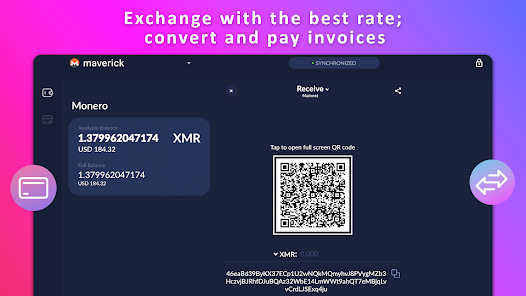
The first myth: a privacy wallet is not a privacy cloak
A crypto wallet generally manages private keys, creates transactions, and communicates with a blockchain network. It does not usually “store” coins in the way a physical wallet stores cash. The assets remain recorded on the network; the wallet controls the credentials needed to authorize spending. In a self-custody design, that control also means responsibility. If the recovery phrase is exposed, an attacker may be able to spend the funds. If it is lost, customer support may have no technical way to restore access.
Privacy has several layers. Network privacy concerns what the blockchain reveals. Device privacy concerns malware, screenshots, cloud backups, and unauthorized access to the phone. Communication privacy concerns the server or node that receives wallet requests. Financial privacy also includes information gathered before or after a transaction, such as identity checks at an exchange, bank records, shipping details, or tax documentation.
This is why a private blockchain and a private wallet are not interchangeable ideas. Monero is designed to obscure important transaction relationships at the protocol level. A wallet such as Cake Wallet provides an interface for using those protections. But if a user buys Monero from a service tied to their identity, sends it to a known address, and then exposes the same phone or account metadata elsewhere, the surrounding information may still weaken practical privacy.
Cake Wallet versus a conventional Bitcoin wallet
Cake Wallet’s strongest appeal is integration. A user can manage supported currencies through a mobile interface rather than maintaining a separate application for every asset. For someone who wants Monero alongside Bitcoin and other supported cryptocurrencies, this reduces app switching and makes routine use more approachable. The trade-off is that a multi-currency wallet has a broader operational surface: more code paths, more network connections, more settings, and more opportunities for a user to misunderstand which privacy properties apply to which asset.
Monero and Bitcoin should not be treated as two versions of the same payment system. Bitcoin’s public ledger makes transaction histories, amounts, and address activity broadly observable. Addresses are not automatically real-world names, so Bitcoin is often described as pseudonymous rather than anonymous. Yet transaction clustering, exchange records, timing, and address reuse can connect activity over time. A Bitcoin wallet may improve privacy through careful coin control, avoiding address reuse, and using privacy-preserving network practices, but those measures do not change the basic transparency of the ledger.
Monero takes a different route. Its protocol uses privacy mechanisms intended to conceal the sender, recipient, and amount from ordinary public observers. The result is a stronger default privacy model for on-chain transactions. The mechanism is not magic, however. Privacy depends on the wider transaction environment, correct wallet behavior, network access, software integrity, and the user’s ability to keep identifying information separate from the transaction trail. Even a robust protocol cannot protect data voluntarily disclosed to a merchant, exchange, phone provider, or compromised device.
For a reader evaluating the cake wallet download, the sensible question is whether the software is obtained from a trustworthy, official distribution path and whether the recovery process is understood before funds are deposited. A download page is not a security guarantee. Users should verify the application source, inspect permissions, keep the operating system updated, and test restoration with a small amount before treating the wallet as a long-term vault.
Where the comparison favors Cake Wallet
Cake Wallet is a practical fit when a user values mobile access, self-custody, and a single interface for supported currencies. It can lower the learning curve for someone who wants to experiment with Monero without abandoning Bitcoin. That matters because security often fails through complexity: users reuse passwords, leave funds on exchanges, or make mistakes when managing several disconnected tools. A simpler workflow can reduce some errors.
Its multi-currency design also exposes an important principle: privacy is asset-specific. A privacy-oriented application does not automatically give Bitcoin the same transaction confidentiality that Monero is designed to provide. The interface may look consistent while the underlying ledgers behave differently. A user should read the transaction details for the particular currency, not infer protection from the app’s branding.
Where a dedicated or hardware approach may be better
A Bitcoin-only wallet can be preferable for users who want fewer features and a narrower attack surface. Advanced Bitcoin users may also want detailed control over transaction inputs, fee selection, address labeling, and network routing. A hardware wallet can add protection by keeping signing keys away from a general-purpose phone, although it introduces its own risks: supply-chain concerns, confusing backup procedures, firmware decisions, and the possibility of approving a transaction without understanding it.
For larger balances, the central comparison may not be Cake Wallet versus another mobile wallet at all. It may be mobile convenience versus separated signing. A phone is frequently online, carried through public places, used with many apps, and exposed to phishing. A dedicated signing device or carefully managed offline setup can reduce some risks, but only if the user can operate it correctly. Security is not a single score; it is a chain, and the weakest link may be the recovery phrase, the screen lock, the exchange account, or the person holding the phone.
Common myths, corrected
Myth: Monero makes the user anonymous in every situation.
Reality: Monero can provide strong on-chain privacy, but identity can leak through acquisition records, communications, spending context, device compromise, or repeated behavioral patterns. Privacy is best understood as reducing information leakage, not erasing every possible clue.
Myth: Bitcoin is completely public, so privacy is impossible.
Reality: Bitcoin’s ledger is transparent, but practical privacy can still be improved. Using fresh receiving addresses, separating transaction purposes, limiting unnecessary disclosures, and avoiding careless linkage can reduce exposure. These practices are more demanding because the underlying ledger remains publicly auditable.
Myth: Self-custody eliminates third parties.
Reality: It removes dependence on a custodian for signing and withdrawal, but users may still rely on wallet servers, remote nodes, internet providers, exchanges, payment processors, and app stores. Each can create a different information or availability risk.
Myth: More privacy features always mean better security.
Reality: Features can protect one threat while adding complexity elsewhere. A user who misunderstands backups or installs a counterfeit application may lose more than a user with a simpler, carefully managed setup. The best design is the strongest one the user can operate reliably.
A reusable decision framework for US users
Start with the asset, not the app. If your main objective is private on-chain spending, Monero’s protocol-level design is more relevant than the wallet’s color scheme or feature list. If your main objective is Bitcoin savings, consider whether you need a multi-currency mobile wallet or a more specialized storage arrangement. For everyday spending, convenience may carry more weight; for a larger reserve, key isolation and recovery testing may matter more.
Next, identify the threat. Are you mainly worried about an exchange freezing funds, a thief obtaining your phone, blockchain observers mapping payments, or accidental loss of your recovery phrase? These are different problems. A Monero wallet addresses some ledger-visibility concerns, while a hardware device may address some phone-compromise concerns. Neither automatically solves account takeover at an exchange or poor operational security.
Finally, test the complete lifecycle. Create a wallet, record the recovery information offline, restore it in a controlled environment, send a small amount, and confirm that you understand the fees and confirmation process. Do not store a recovery phrase in ordinary cloud notes or send it through email. On a US phone, biometric unlock is useful for convenience but should not be mistaken for a replacement for the underlying recovery secret.
What to watch next
No recent project-specific news is available here that would justify claiming a new Cake Wallet feature or a current change in its supported assets. That is a useful discipline in itself: wallet selection should not be based on imagined updates or promotional claims. The signals worth monitoring are more concrete—how clearly software communicates its security model, how promptly vulnerabilities are handled, whether users can verify releases, how node and server connections are explained, and whether backups remain understandable as features expand.
If multi-currency wallets continue to attract privacy-focused users, the likely challenge will be education rather than simply adding more coins. Interfaces will need to show when a transaction is private by protocol, when it is merely pseudonymous, and what information a remote service can observe. Conditional on those explanations becoming clearer, users may make better decisions without becoming security specialists. If interfaces hide the distinctions, convenience could instead encourage false confidence.
Privacy wallet FAQ
Is Cake Wallet a Monero wallet or a multi-currency wallet?
It is commonly used as a mobile wallet for Monero and supported additional cryptocurrencies, including Bitcoin. The important point is that its interface may be multi-currency, but privacy properties remain specific to each asset and transaction network.
Can a privacy wallet protect funds if the phone is hacked?
Not reliably. A privacy-focused protocol can limit public blockchain information, but malware may capture passwords, recovery phrases, or signed transaction details. Keep the device updated, avoid unofficial applications, protect backups offline, and consider stronger key isolation for significant balances.
Should I use one wallet for Monero and Bitcoin?
It depends on your priorities. One app may improve convenience and reduce tool sprawl, while separate wallets can make asset-specific controls and risk boundaries clearer. Choose the arrangement you can back up, update, and restore without confusion.
The clearest conclusion is also the least marketable one: a wallet is not private merely because it carries the word privacy. Cake Wallet can be a useful bridge between Monero’s stronger on-chain confidentiality and Bitcoin’s broader, more transparent ecosystem. But the bridge has limits. Good privacy comes from matching the asset, wallet, device, network, and personal habits to the threat you actually face—and understanding exactly what remains visible.
Leave a Reply