Most crypto losses do not begin with a dramatic hack. They often begin with an ordinary click: a token approval granted to a DeFi contract, a wallet connection left active, or a transaction signed without understanding what it authorizes. That is the counterintuitive part of wallet security. The private key may remain secret while the assets are still exposed through permissions already given on-chain.
Rabby Wallet is designed for the browser-based DeFi environment, where users move between decentralized exchanges, lending markets, bridges, NFT applications, and multiple blockchain networks. Its value is not that it makes risky transactions risk-free. Rather, it can help turn an opaque signing moment into a more inspectable decision. For US users downloading the browser extension, the important question is not simply “Is Rabby safe?” It is: “What does the wallet show me, what authority am I granting, and what remains my responsibility?”
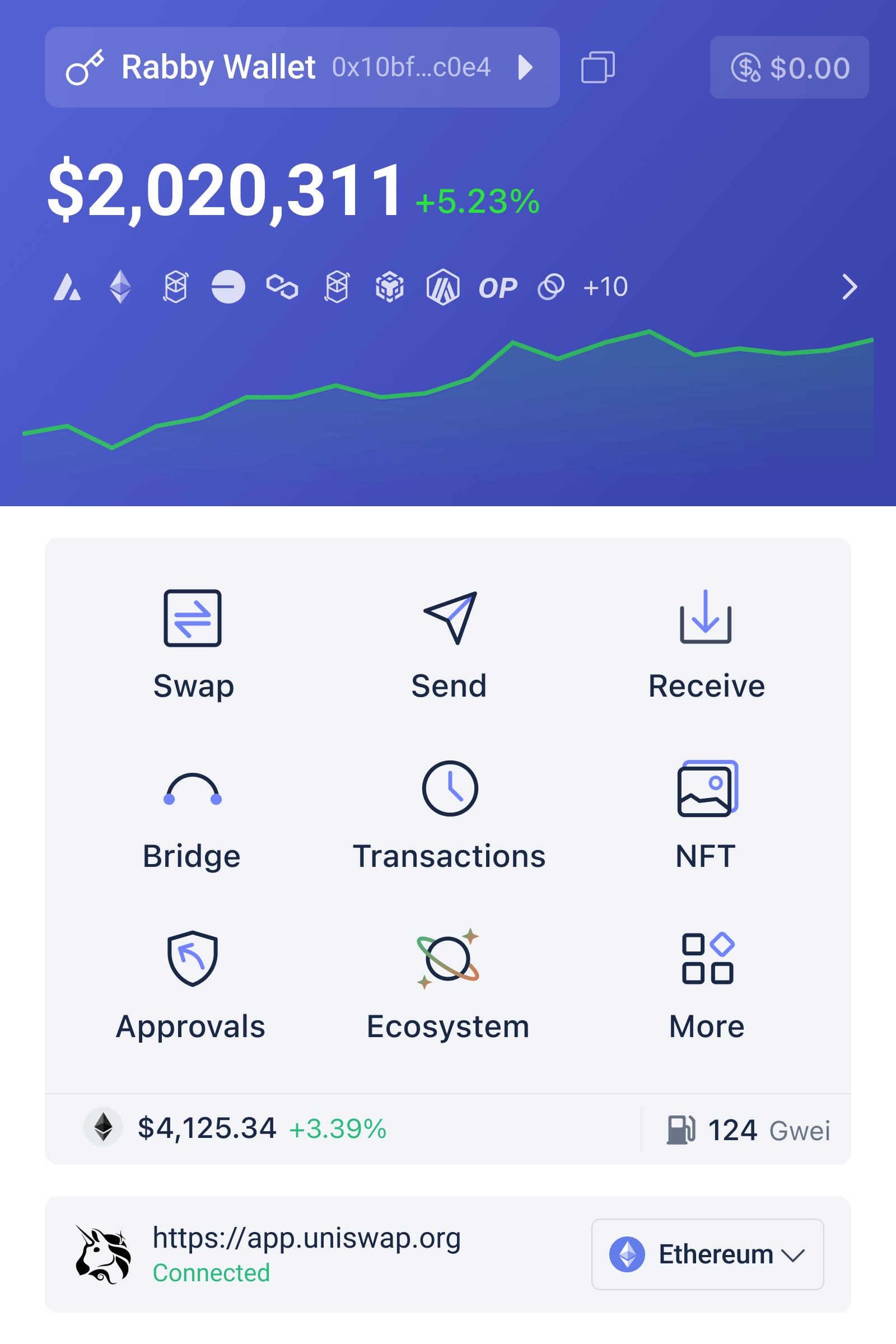
What Rabby Wallet Actually Changes
A browser wallet is an interface between a user and blockchain applications. When a DeFi site asks for a transaction, the wallet receives a proposed set of instructions. Those instructions may transfer tokens, exchange assets, deposit funds, interact with a smart contract, or change a permission. The wallet does not rewrite the underlying protocol. It presents the request, helps the user select an account and network, and asks for a signature.
That distinction matters. A wallet such as Rabby can improve visibility, but it cannot guarantee that a smart contract will behave honestly after deployment. It cannot recover funds sent to the wrong address, reverse a confirmed blockchain transaction, or compensate a user who approves a malicious spender. Wallet security is therefore partly a software problem and partly a decision problem.
Rabby’s practical appeal for DeFi users comes from features intended to make transaction review more informative. Depending on the network and the application, a user may see estimated balance changes, the assets involved, and warnings or risk indicators before signing. These signals can be useful because raw blockchain call data is difficult for most people to interpret. Still, a warning system should be treated as an additional control, not as a substitute for verifying the application, domain, contract, network, and intended action.
If you are beginning with the extension, use the official project distribution channel and verify that the browser store listing, publisher details, and installation prompts are consistent with the genuine wallet. A useful starting point is this rabby extension download guide, but users should still inspect the URL and avoid installing wallet software from unsolicited advertisements, pop-ups, or direct-message links. Phishing pages frequently imitate wallet branding precisely because the installation step is a high-value target.
The Token Approval Problem Most Users Misunderstand
A token approval is not the same as sending tokens. It is a permission recorded in a token contract. In a common Ethereum-style token model, the token owner allows a specified spender—often a DeFi contract—to transfer up to a certain amount from the owner’s balance. The user may approve a limited amount, the entire current balance, or an effectively unlimited allowance. The transfer can happen later, when the user is not actively looking at the wallet.
This creates a useful mental model: your wallet controls the signing key, but approvals can create standing instructions that other contracts may use. If the approved contract is exploited, upgraded in an unsafe way, or deceptive from the beginning, the allowance may become an attack surface. The risk is not identical in every case. A limited approval to a well-understood contract is different from an unlimited approval to an unfamiliar application. But both should be treated as permissions, not as harmless setup steps.
Unlimited approvals are popular because they reduce repeated transactions and network fees. On a busy decentralized exchange, approving a token once can make later swaps more convenient. The trade-off is persistence. An approval may remain active after the user stops using the protocol, changes strategy, or forgets that the permission exists. A lower allowance can reduce potential exposure, although it may require additional approvals and transactions later.
This is where token approval management becomes operational security. A user should periodically review which contracts can spend which tokens, on which networks, and for how much. Revoking an approval usually requires an on-chain transaction, which means paying a network fee and selecting the correct account. Revocation also does not erase historical activity or make a compromised wallet safe. It changes a permission; it does not repair every possible problem.
How to Review an Approval Before Signing
Before confirming an approval, pause at the point where the wallet displays the requested allowance. Ask four questions. What token is being approved? Which contract or spender receives the permission? Is the amount limited or effectively unlimited? Why does this application need the permission for the action you are taking?
The second question is especially important because recognizable application branding is not proof of contract legitimacy. A fake website can request approval for a look-alike contract. A legitimate front end can also be compromised, and a legitimate contract can contain vulnerabilities. Checking the domain, using bookmarked application addresses, and comparing the displayed network with the intended network reduce avoidable mistakes, though they cannot eliminate smart-contract risk.
Transaction simulation and balance-change previews can help expose obvious inconsistencies. If a supposed token deposit appears to transfer unrelated assets, or a swap preview shows an unexpected recipient or output, stop. Do not sign merely because the wallet labels the transaction as low risk. Automated systems have incomplete information, and a clean-looking preview does not prove that the protocol’s economics or governance are sound.
A strong workflow separates “permission signing” from “value transfer.” First, understand whether you are granting an allowance. Then, separately inspect the transaction that uses it. This distinction prevents a common misconception: approving a token does not necessarily complete the trade, deposit, or bridge. It may only give the next contract permission to act.
Installation and Everyday Security Discipline
When installing Rabby or any browser wallet, the safest sequence begins with the browser and operating system you already trust. Update them, remove suspicious extensions, and use a password manager where appropriate. During wallet creation, the recovery phrase should be generated and stored offline in a private location. It should never be entered into a website, shared with support, photographed for cloud storage, or copied into an online form.
Importing an existing wallet requires even greater caution. A browser extension that asks for a private key or recovery phrase can control the assets associated with it. Anyone claiming to be customer support and requesting those credentials is asking for the most sensitive information in the system. Hardware wallets can reduce exposure of the signing key, but they do not make malicious approvals or careless transaction confirmation impossible; the user may still approve an unsafe action on the hardware device.
Consider using separate accounts for different purposes. One account can hold longer-term assets, while another handles experimental applications or frequent trading. This does not create perfect isolation, particularly if the same recovery phrase or device is compromised, but it can limit the blast radius of an approval or application mistake. For larger balances, a hardware-backed or multisignature setup may be more appropriate than a single browser wallet.
Network confusion is another practical boundary. DeFi applications may support several chains with similar token names and different contract addresses. A familiar asset symbol does not establish that two tokens are interchangeable or equally trustworthy. Before signing, verify the selected chain, the application’s expected network, the token contract when relevant, and the destination address. US users should also remember that wallet software generally does not determine tax treatment, securities status, or regulatory obligations; those questions depend on the activity and circumstances.
Where Rabby Helps—and Where It Does Not
Rabby can make the transaction-signing surface more legible. That is meaningful because users cannot manage risks they cannot see. A preview that identifies an unexpected asset movement may stop a mistake before confirmation. Approval views can also encourage users to think of permissions as inventory that must be maintained rather than as forgotten setup steps.
But visibility has limits. Simulation results depend on the state of the blockchain and the assumptions made by the simulation system. A transaction can behave differently because of changing prices, block ordering, contract state, oracle updates, or interactions that are difficult to model. Warning systems may miss novel attacks, while cautious warnings may appear for transactions that are legitimate. The correct response to a reassuring interface is not blind trust; it is better-informed verification.
The deeper security principle is defense in depth. Use a genuine extension, protect the recovery phrase, verify application domains, limit approvals when practical, review allowances, separate high-value holdings, and sign only after checking the expected outcome. No single measure carries the entire burden. A wallet can improve the user interface, but the blockchain’s irreversibility makes prevention more valuable than cleanup.
What to Watch as DeFi Wallets Evolve
Future wallet improvements are likely to matter most when they reduce the gap between human intent and machine-readable transaction data. Better simulations, clearer approval histories, warnings about unusual spenders, and account-level separation could make routine DeFi activity easier to audit. The conditional implication is straightforward: if these tools become more accurate without encouraging users to ignore the details, they may reduce routine approval mistakes.
The unresolved issue is whether convenience will outrun comprehension. One-click approvals, automatic routing, and bundled transactions can simplify DeFi while making the underlying authority harder to understand. Users should watch not only for new security features, but also for whether those features explain what changed, which contract is involved, and what permission remains afterward.
The most reusable rule is simple: treat every approval as a standing authorization, not as a button required to unlock an application. Review it when granted, reduce it when practical, and revoke it when the relationship no longer serves a purpose. Rabby can help organize that process, but the final security boundary is still the user’s judgment before signing.
Frequently Asked Questions
Does Rabby Wallet automatically prevent malicious token approvals?
No. Rabby may provide transaction previews, simulations, and risk signals that help identify suspicious or unexpected activity, but no wallet can guarantee that every malicious contract or compromised website will be detected. Users must still verify the application, spender, network, and allowance amount before signing.
Should I revoke every token approval after using DeFi?
Not necessarily. Revoking unused approvals can reduce lingering exposure, but it costs an on-chain transaction fee and may make future use less convenient. A practical approach is to prioritize unlimited approvals, unfamiliar spenders, abandoned protocols, and permissions connected to accounts holding significant value. Keep only the permissions that have a clear ongoing purpose.
Is a limited approval completely safe?
No. A limited approval reduces the amount the spender can transfer under that permission, but it does not prove that the contract is legitimate or that the transaction is appropriate. Other approvals, signed messages, compromised devices, and incorrect addresses can create separate risks.
Leave a Reply